Route de la Craie – Ormes
Le visiteur pourra s’attarder dans le cimetière devant la Croix « Hosannière ». Ornée d’une croix de Malte sur le socle, elle marque la tombe la plus ancienne : celle d’une femme née en 1788.
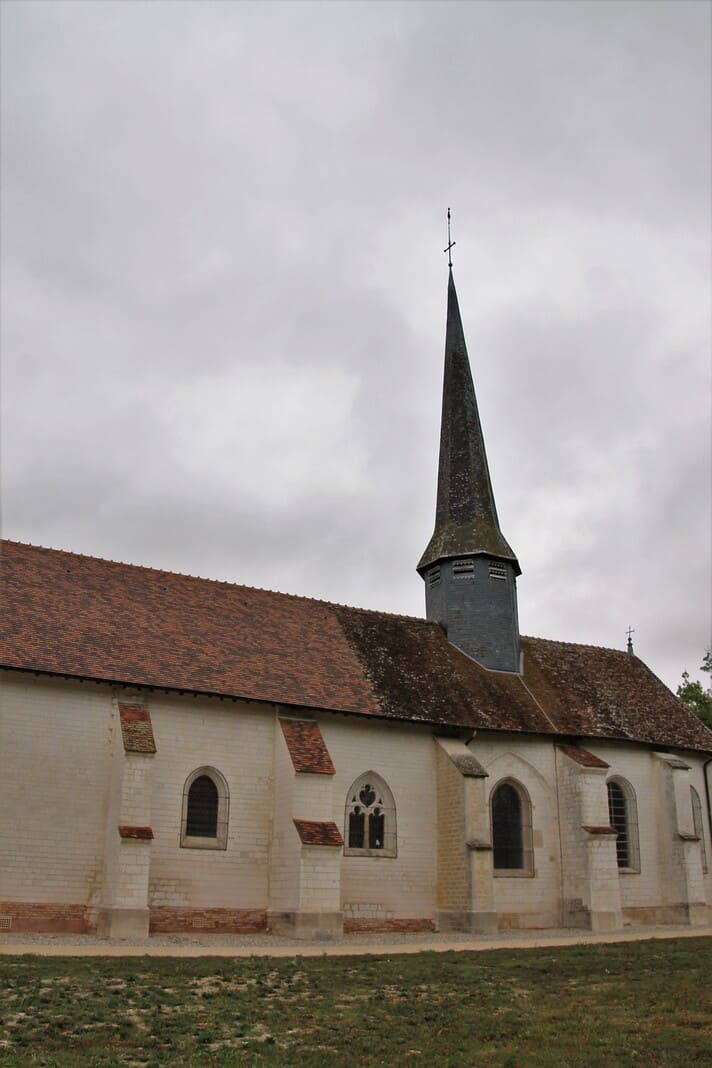
Sur le mur nord de l’église, des inscriptions lapidaires sont la marque du recueillement pour les défunts inhumés dans les fosses communes. Certaines prennent la forme de croix perlées.
Visitors to the cemetery can linger in front of the ‘Hosannière’ Cross. Adorned with a Maltese cross on the base, it marks the oldest grave: that of a woman born in 1788.
On the north wall of the church, lapidary inscriptions are the mark of reverence for the deceased buried in the mass graves. Some take the form of beaded crosses.
Auf dem Friedhof kann der Besucher vor dem „Hosannière“-Kreuz verweilen. Es ist mit einem Malteserkreuz auf dem Sockel geschmückt und markiert das älteste Grab: das einer 1788 geborenen Frau.
An der Nordwand der Kirche sind Lapidarinschriften ein Zeichen der Andacht für die Verstorbenen, die in den Gemeinschaftsgräbern beerdigt wurden. Einige nehmen die Form von Perlenkreuzen an.
Cette place concentre les principaux types de construction de nos villages avec, au nord, une maison de la fin du XIXe siècle en briques avec modénature*.
Au second plan, la place est flanquée de bâtiments en craie construits avant 1860.
Sur la droite au premier plan, un bâtiment à chaînages et encadrements en pierres et briques, avec toiture à la Mansard, et son ensemble poteaux-portail.
Au sud, découvrez une belle construction en colombage et torchis.
Traitement ornemental de l’architecture d’un édifice.
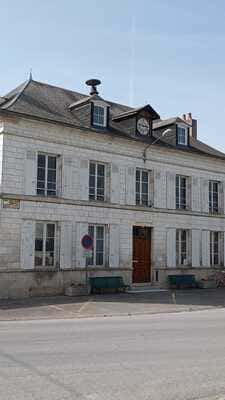
Plusieurs mairies-écoles en craie sont recensées sur notre territoire.
Celle d’Ormes est construite en 1855-56 par Basile Berey, architecte à Arcis, et les entrepreneurs Simonnot de Troyes et Naquemouche de Pouan.
Berey et Simonnot édifient la mairie-école de Le Chêne deux ans plus tard.
Basile Berey (1796-1873), auteur de mairies-écoles en pans de bois (Champigny) et de ponts (Trouans), intervient aussi sur les églises.
Des salles de classe sont élevées à côté de la mairie dans les années 1950, aujourd’hui utilisées comme salle de réunion.
La construction initiale est entièrement dévolue à la mairie, à son secrétariat et à la salle du conseil.

This square features the main types of building found in our villages, with a late 19th-century brick house with modenature* to the north.
In the background, the square is flanked by chalk buildings constructed before 1860.
On the right, in the foreground, a building with stone and brick quoins and surrounds, with a Mansard roof, and its post and gate combination.
To the south, a fine half-timbered and cob building.
Ornamental treatment of the architecture of a building.
There are several chalk school-halls in our area.
The one in Ormes was built in 1855-56 by Basile Berey, an architect from Arcis, and contractors Simonnot from Troyes and Naquemouche from Pouan.
Berey and Simonnot built the Le Chêne town hall and school two years later.
Basile Berey (1796-1873), who built timber-framed school town halls (Champigny) and bridges (Trouans), also worked on churches.
Classrooms were built next to the town hall in the 1950s, and are now used as meeting rooms.
The original building was entirely given over to the town hall, its secretariat and the council chamber.
Auf diesem Platz konzentrieren sich die wichtigsten Bautypen unserer Dörfer. Im Norden steht ein Haus aus dem späten 19. Jahrhundert aus Ziegelsteinen mit Modénature*.
Im Hintergrund wird der Platz von Gebäuden aus Kreide flankiert, die vor 1860 errichtet wurden.
Rechts im Vordergrund befindet sich ein Gebäude mit Verkettung und Einfassungen aus Stein und Backstein, mit einem Mansarddach und seiner Pfosten-Tor-Kombination.
Im Süden entdecken Sie ein schönes Gebäude aus Fachwerk und Lehm.
Ornamentale Behandlung der Architektur eines Gebäudes.
In unserem Gebiet gibt es mehrere Schulrathäuser aus Kreide.
Das von Ormes wurde 1855-56 von Basile Berey, einem Architekten aus Arcis, und den Bauunternehmern Simonnot aus Troyes und Naquemouche aus Pouan erbaut.
Berey und Simonnot errichteten zwei Jahre später das Rathaus mit Schule in Le Chêne.
Basile Berey (1796-1873), der Fachwerk-Rathausschulen (Champigny) und Brücken (Trouans) baute, war auch an den Kirchen beteiligt.
In den 1950er Jahren wurden neben dem Rathaus Klassenzimmer errichtet, die heute als Versammlungsraum genutzt werden.
Das ursprüngliche Gebäude wurde vollständig für das Rathaus, sein Sekretariat und den Ratssaal genutzt.